APPLIED HOCKEY SCIENCES
"I was never a star on any team I played on, but I always tried to work harder than anybody else I played with.  I am living proof that if you work hard, and dedicate yourself to a proven program of training, you can go places in hockey that nobody else ever thought was possible..."     

                                           - Craig Shepherd
                                            Applied Hockey Sciences
                                         
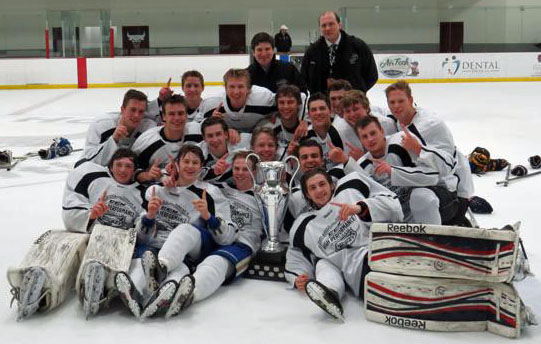
Applied Hockey Sciences program director is Craig Shepherd. Craig has been coaching for 18 years and has coached at the High School, Jr. and Professional levels of hockey. Craig has served the last two years as head coach of Team Minnesota at the NAHL/NAPHL Showcase held in Blaine, Minnesota.  Craig's knowledge of Russian team systems, training methods, and implementation of hockey specific periodization programs is highly respected.  Craig is a Level 4 certified coach by USA Hockey, and has also served as a head coach, and conducted motivational speaking seminars at the USA Hockey/Reebok Select 15's and 16's Advanced Hockey Festivals.  Craig also has served as a motivational speaker for organizations such as the United Way, Special Olympics, and Big Brothers, always bringing his "Rome was not built in a day because I was not ruling when it was built" attitude to all that he speaks to and coaches.   
  
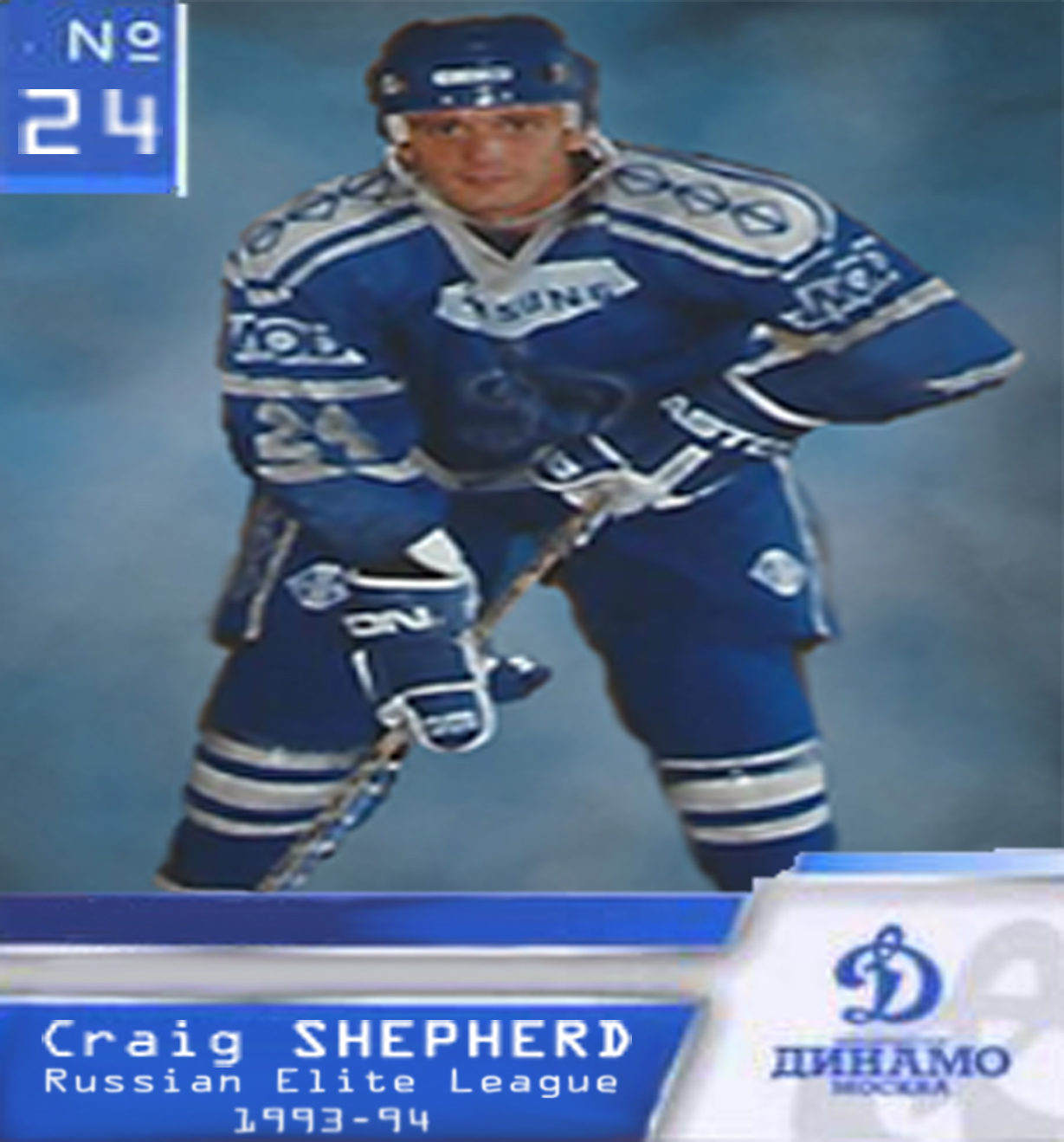
As a hockey player Craig holds the distinct honor of being the first ever non-Russian player to ever play for Dynamo Moscow in the former Soviet Elite League (now known as the KHL) as a free agent. There were no N.H.L. trade agreements, no special deals. Just a plane ticket, and as Craig explains it: 

"My agent told me to see the sites of Moscow because I was only going to be there for two weeks. After those wonderful words of encouragement he forgot all about me. Two and a half months later, after six hours a day training, six days a week, in a training camp that would seem like a prison to most, but hockey heaven to me, I called my agent and told him to call U.S.A. Hockey and get my transfer papers switched over from my previous team in Germany. I had just signed a contract with Dynamo Moscow. Boy was he surprised!"  

This did not happen by accident.  Craig had a goal.  He wanted to prove that a North American hockey player could train like a Russian, and get the same results if he was willing to put in the same amount of effort.  He sought the advice of experts like Jack Blatherwick and Randy Klevin who had studied the Russian system and were willing to use their knowledge to train him.  For six months prior to leaving for Russia,  Craig trained six days a week, six hours a day, to prepare for the rigors of the legendary Dynamo Moscow training camp.

Previous to Dynamo Moscow, Craig played professionally in Germany and in North America. He attended three N.H.L. training camps; two with the Pittsburgh Penguins, and one with the Calgary Flames. All three of those years the teams Craig tried out for were the defending Stanly Cup Champions. As a college player Craig received his degree in Communications from Michigan State University while being part of a team that won two C.C.H.A. league championships, and made four N.C.A.A. tournament apperances, and two N.C.A.A. Frozen Four appearances. Previous to Michigan State, Craig played one season at U.S. International University where he helped the Gulls win the Great Western Hockey League Championship and was selected as an alternate captain as a freshman.  Previous to his college and professional playing days Craig played one season in the U.S.H.L. Jr. hockey league for the Minneapolis Jr. Stars.  Craig played high school hockey in Edina, Minnesota where he was a member of the 1984 Minnesota State High School Championship team.

In addition to playing professional ice hockey, Craig made history when he became the first and only person in the world to have competed in professional ice hockey, and in professional figure skating, when he competed at the U.S. Professional Pairs Figure Skating Championships on national television.

"Looking back on what I did in figure skating, and having never figure skated before in my life... even to me it seems impossible what I did; and I actually lived it.  It just goes to show what can be accomplished if you put your mind to it, work incredibly hard, believe in yourself, and follow a regimented training program.  It was an incredible experience, I worked with some of the best Olympic coaches in the world, and when you do that, you can learn in two minutes secrets that make you rapidly improve as a skater, and secrets that can also make you a better coach.  While figure skating I was fortunate enough to work with Tatiana Tarasova the daughter of Anatoli Tarasov. Tatiana trains skaters the same way her father trained hockey players, very, very, hard.  She also gets the same results with her skaters that her father did with hockey teams, that being many world and Olympic championships over the years.  I am grateful to her and the other Olympic level coaches that took time to work with me."
 
Craig feels very fortunate to have been exposed to great coaching throughout his entire career.  His past coaches in both hockey and figure skating reads like a who's who of coaching...with hockey coaches like Bob Johnson, Ron Mason, Vladimeer Goloboich, Willard Ikola, Bob O'Connor, Grant Stanbrook, George Gwozdecky, Edo Novak, and Vitaly Erfilov; figure skating coaches like Igor Moskvine, Tatiana Tarasova, Sarah Kawahara and Ushi Kessler; and conditioning coaches like Jack Blatherwick, Randy Klevin and Charles Poloquin.

"It is truly amazing when I think about the past coaches I worked with and played for.  They all had a different way of teaching, and as a student of the game, I studied each one of them.  I always kept notebooks on each team I played for, and I am grateful to all of my past coaches for being as dedicated as they were.  They all had a major impact on my career and on my life as a person, and I am very fortunate to have the opportunity to be able to pass their knowledge on to the players of today."

In addition to coaching hockey players, in 2004-5 Craig also served as the Slovakian Figure Skating Federations head pairs coach and the head coach of the Slovakian national pairs team of Olga and Joseph Bestandig. Under Craig's direction, the team won the 2004 Slovakian national championships and competed at both the 2005 European Figure Skating Championships in Torino, Italy, and at the 2005 World Figure Skating Championships in Moscow, Russia.

Away from coaching, Craig is also a commercial and instrument rated helicopter pilot. He currently holds an F.A.A. teaching degree as a Certified Flight Instructor for helicopters.
"BUILDING BETTER HOCKEY PLAYERS THROUGH SCIENCE"
APPLIED HOCKEY SCIENCES

1994 Craig Shepherd
Dynamo Moscow # 24
Click On Thumbnail For Larger View
  1994 Dynamo Moscow
Applied Hockey Sciences Established Since 2000
  Craig Shepherd Michigan State University
  Craig Shepherd Coaching